This page showcases my pre-production responsibilities as a 2nd Camera Assistant (2nd AC), highlighting the tasks I carried out to prepare for filming.

My 2nd AC
Responsibilities


3
Camera Report Sheets
During the test shoot, I filled in the camera report sheets, recording all the important details from each shot, including lens sizes, camera settings and any additional notes. By documenting this information, I was able to refer back to it during the afternoon shoot and apply the same settings and equipment choices where needed. This helped maintain consistency between shots and made the camera department’s workflow more organised and efficient.
2
Mark Camera Posistions
As the 2nd AC, I was responsible for marking camera positions during the shoot using coloured tape on the floor. This allowed us to easily identify where the camera needed to be positioned for each setup, making it quicker to return to previous camera positions when needed. I used different coloured tape to help distinguish between setups and keep everything organised.
1
Organise The Mag Liner
As the 2nd AC, one of my responsibilities was organising the Magliner before the shoot to make sure all the camera equipment was stored safely and easily accessible. I arranged equipment such as lenses, batteries, cables and other accessories so they could be quickly located when needed. I also made sure everything was secure and had its own place to prevent equipment from getting damaged or misplaced. Keeping the Magliner organised helped me work more efficiently as a 2nd AC, allowing me to quickly provide equipment to the 1st AC and reduce unnecessary delays during filming.

6
Organised Cables
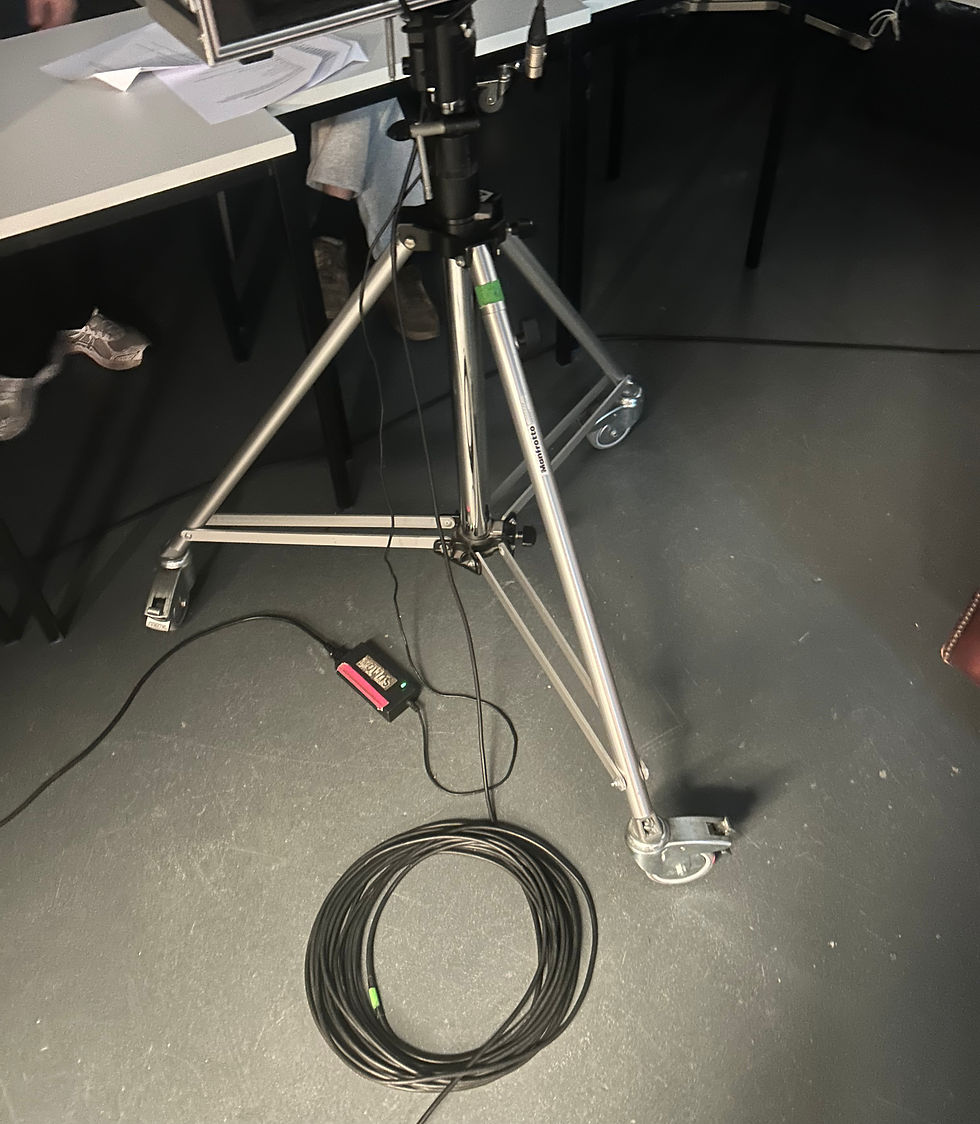
As the 2nd AC, I made sure all cables were kept tidy and organised throughout the shoot to maintain a safe working environment. I carefully coiled any unused cables and secured them with bongo ties to prevent them from becoming tangled or damaged. I also made sure cables running across the set were positioned safely and used rubber cable mats when necessary to reduce trip hazards for the cast and crew. This helped keep the set organised, protected the equipment and allowed everyone to move around safely without unnecessary obstructions.
5
Mark Actors Positions
As the 2nd AC, one of my responsibilities was marking the actors’ positions during rehearsals using coloured tape on the floor. This involved identifying where the actors needed to stand or stop during a scene and placing marks to help them return to the correct positions for each take. These marks also helped the 1st AC maintain accurate focus by providing reference points for the actors’ distances from the camera. I made sure the marks were clearly identifiable and positioned so they wouldn’t interfere with the shot. This helped maintain consistency between takes and made the filming process more efficient.
4
Clapper Board
As the 2nd AC, one of my main responsibilities was operating the clapperboard throughout the shoot. This involved making sure the correct scene, slate and take numbers were displayed before each shot. I positioned the clapperboard clearly in front of the camera so the information could be recorded, before calling out the details and clapping the sticks to create a synchronisation point for the picture and sound in post-production. I also made sure to update the clapperboard between takes and communicate with the camera and sound departments.